When considering lighting solutions, a key question arises: "What is the difference between residential and commercial grade lighting?" This distinction is crucial for selecting the right fixtures for various spaces. The International Association of Lighting Designers reports a 50% increase in energy efficiency in commercial setups compared to residential.
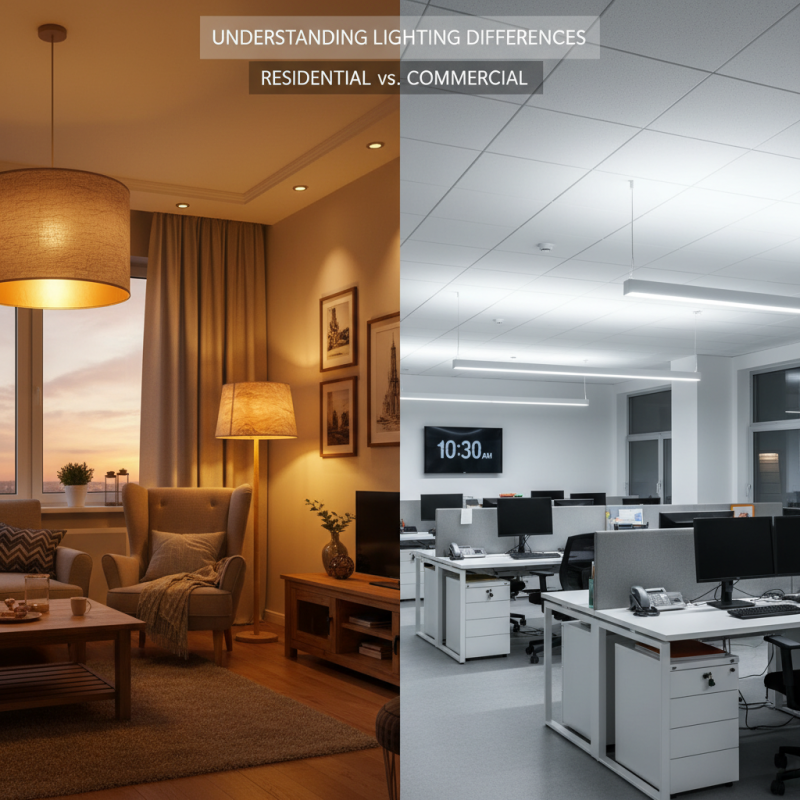
Experts in the field have highlighted these differences. According to lighting specialist Dr. James O’Reilly, "Residential lighting focuses on ambiance, while commercial lighting prioritizes function and efficiency." This statement encompasses the core of the debate. Residential lights often feature softer designs to create warmth at home, while commercial lights are built for performance and durability.
Data shows that commercial lighting systems can last up to 50,000 hours, significantly exceeding the typical lifespan of residential bulbs. However, many consumers remain unaware of the distinct requirements each setting demands. Understanding these differences is vital for everyone—from homeowners to business managers—who seek optimal lighting solutions tailored to their needs.
Types of Residential Lighting: Key Features and Applications
When exploring residential lighting, it's important to recognize its distinct types and specific applications. Ambient lighting is fundamental in homes, providing overall illumination. It creates a welcoming atmosphere, averaging about 100-300 lumens per square meter. This type often incorporates ceiling fixtures or recessed lights, ensuring rooms feel bright without harsh glare.
Task lighting plays a significant role in functional areas. It includes desk lamps for studying or under-cabinet lights in kitchens. This type of lighting is crucial, especially as studies indicate that well-lit workspaces can enhance productivity by up to 20%. Fixtures vary, offering focused light that addresses specific needs.
Accent lighting serves as an artistic tool. It highlights paintings or architectural features. It typically uses spotlights or track lights, inviting creative expression. However, improper use can overpower a space, making balance essential. Adapting these types of lighting depends on individual preferences and room characteristics.
Types of Commercial Lighting: Key Features and Applications
Commercial lighting plays a vital role in various industries. Typically, it is designed to enhance visibility, safety, and productivity. Important types include LED, fluorescent, and HID lighting, each offering unique features. According to the U.S. Department of Energy, LED lighting options can last up to 25,000 hours, making them a cost-effective choice. Fluorescent lights, while less efficient than LEDs, still provide significant illumination at lower costs, ideal for budget-conscious businesses.
The application of these lighting types varies greatly. For example, retail spaces benefit most from high-CRI LED lights that boost product appearance. On the other hand, warehouses often use high-bay lighting, ensuring bright illumination over expansive areas. A report by the International Energy Agency indicates that over 60% of commercial buildings can optimize energy use with effective lighting strategies.
However, challenges remain. Many businesses neglect to assess their lighting efficiency regularly, potentially leading to higher energy costs and a less inviting environment.
It's essential for businesses to weigh their options carefully. Some may choose cheaper solutions that compromise quality. This approach can affect overall ambiance and employee morale. Investing in quality commercial lighting pays off in the long run, yet understanding the nuances of each option is critical. Businesses must stay informed to adapt their strategies effectively.
Comparative Analysis: Residential vs. Commercial Lighting Needs
When considering lighting needs, residential and commercial environments differ significantly. Residential lighting focuses on creating a warm and inviting atmosphere. This typically involves softer, ambient lights, accent lighting for art pieces, and task lighting for work areas. These spaces often prioritize aesthetics and comfort. Homeowners may favor dimmers and smart bulbs to adjust the mood.
On the other hand, commercial lighting is geared more toward functionality and efficiency. Whether it’s an office, retail store, or industrial space, lighting must support productivity. Bright, uniform lighting is often required for safety and visibility. Businesses might use energy-efficient options to reduce costs and meet regulations. Yet, some commercial spaces might overlook the importance of a pleasant atmosphere, leading to employee discomfort.
Both types of lighting serve unique purposes, but they can sometimes overlap. A residential space may need brighter lights during work-from-home hours. Conversely, a commercial space can benefit from warm lighting in a break room. There is room for improvement in both areas, as understanding user needs can drive better choices. Each space should reflect its occupants’ needs and enhance their experience.
Design Considerations for Residential and Commercial Lighting
When designing lighting for residential spaces, comfort is essential. Soft, warm lights create a cozy atmosphere, promoting relaxation. Think of spaces like living rooms and bedrooms where a soothing environment is paramount. Use dimmers to adjust brightness based on the time of day or activity. Natural light also plays a vital role here, enhancing mood and well-being.
Commercial lighting, on the other hand, focuses on functionality and efficiency. In offices, bright, cool lights improve productivity and focus. Think about how the layout of workspaces affects light distribution. Poor lighting can lead to fatigue and decreased performance. Reflect on the balance between task lighting and ambient lighting. This balance can be tricky; overly harsh lights can create an unwelcoming feel.
Both residential and commercial lighting require thoughtful planning. Consider energy efficiency and sustainability. Using LED lights is a step in the right direction, but not every space suits every solution. Ask for feedback on your choices. This practice helps create spaces that truly serve their purpose.
Energy Efficiency and Sustainability in Lighting Choices
When considering energy efficiency in lighting, both residential and commercial settings face unique challenges. According to the U.S. Department of Energy, lighting accounts for around 15% of electrical consumption. However, commercial spaces often use significantly more energy due to extensive operating hours and larger areas. This makes the transition to energy-efficient lighting crucial for sustainability. LED technology can reduce energy use by up to 75%, a consideration that is often overlooked.
Commercial buildings must also factor in their impact on environmental sustainability. The Global Lighting Association indicates that lighting contributes to 5% of global greenhouse gas emissions. By investing in smart lighting systems, businesses can control light usage based on occupancy and natural light availability. This not only cuts costs but also minimizes the building's carbon footprint. Many companies report that integrating energy-efficient lighting saves them thousands annually, highlighting a need to rethink lighting as a critical aspect of operational strategy.
Choosing the right lighting impacts more than just energy bills; it affects employee well-being and productivity. Brightness and color temperature can influence mood and performance. It's vital for businesses to evaluate their lighting choices, considering how they align with sustainable practices. A thoughtful approach to lighting is not merely an operational detail—it’s a significant step toward a greener future.
FAQS
: Ambient lighting provides overall illumination. It creates a welcoming atmosphere in homes.
Ambient lighting typically averages about 100-300 lumens per square meter, ensuring brightness without glare.
Task lighting is essential for specific activities. It includes desk lamps for studying and under-cabinet kitchen lights.
Studies suggest well-lit workspaces can enhance productivity by up to 20%. Proper lighting is crucial for focus.
Accent lighting highlights artistic features, such as paintings. It uses spotlights but must be balanced to avoid overpowering.
Key types include LED, fluorescent, and HID lighting. Each type offers unique features suited for different business needs.
Many businesses neglect lighting assessments. This can lead to higher energy costs and a less inviting environment.
Residential lighting focuses on warmth and comfort. Commercial lighting emphasizes functionality and efficiency for productivity.
Cheaper solutions can compromise quality. This might affect ambiance and employee morale in the workplace.
Both residential and commercial spaces can benefit from better understanding. Each space should enhance the occupants' experience.
Conclusion
The article "Understanding the Difference Between Residential and Commercial Lighting" explores the distinct characteristics and applications of lighting in residential and commercial settings. It outlines various types of residential lighting, highlighting their features and typical uses, such as ambient, task, and accent lighting, which cater to comfort and aesthetic appeal in homes. Conversely, the article delves into commercial lighting types, emphasizing their focus on functionality, safety, and efficiency in work environments like offices and retail spaces.
A comparative analysis reveals critical differences in lighting needs, where residential lighting prioritizes ambiance and personalization, while commercial lighting emphasizes productivity and regulatory compliance. Design considerations for both contexts are discussed, along with the importance of energy efficiency and sustainability in making lighting choices. Ultimately, the article answers the question, "What is the difference between residential and commercial grade lighting?" by showcasing the unique demands and standards that differentiate these two categories in the world of lighting design.

 Trandic Light