Installing heavy oversized chandeliers can be daunting. It's essential to approach this task with caution and expertise. According to lighting industry expert, Jonathan Lightman, "The key to a successful chandelier installation lies in proper preparation and safety measures." His insights highlight the importance of understanding the correct techniques.
When asking yourself, "How to install heavy oversized chandeliers safely?" it's crucial to consider stability, weight distribution, and secure mounting. A chandelier can weigh several hundred pounds. Therefore, using the right tools and materials can make a significant difference.
Proper planning and knowledge of your ceiling structure are vital. Assess whether your ceiling can support the fixture's weight. Often, homeowners overlook this critical step, leading to potential hazards. Implementing safety measures, such as using a sturdy ladder and having a reliable support system, is equally important. Installing heavy chandeliers is not just about aesthetics; it’s about safety and reliability.
Choosing the Right Location for Your Oversized Chandelier
Choosing the right location for your oversized chandelier is crucial for both aesthetics and safety. First, consider the height of your ceilings. A chandelier should hang at least seven feet above the floor to allow for ample clearance. This ensures safety, especially in high-traffic areas. If your home has low ceilings, a flush mount may be more appropriate.
Next, think about the space around the chandelier. Measure the room and the chandelier dimensions accurately. The chandelier should complement the room's scale. In a grand foyer, an oversized chandelier can serve as a stunning focal point. But in smaller spaces, it might overwhelm the existing decor and create a cluttered feel.
Lighting placement also affects the ambiance. A well-placed chandelier can provide a warm, inviting glow. However, if positioned too close to walls or furniture, it might cast unwanted shadows. Evaluate how natural light flows through the room. Reflections and shadows can create dynamic effects, so testing the installation position can help. You may need to adjust its height or location after installation to achieve the perfect balance.
Assessing the Weight and Size of the Chandelier
Assessing the weight and size of a chandelier is crucial for a successful installation. Begin with measuring the dimensions of the chandelier. Use a tape measure to find its height, width, and depth. This will help you visualize how it will fit in your space. Consider the room's overall dimensions too. A chandelier that is too large can overwhelm a small room, while a tiny one might get lost in a grand space.
Next, weigh the chandelier. Heavy chandeliers require solid support. Check the manufacturer’s specifications for the weight. You want to ensure your ceiling can bear this load. Use a scale if needed. Many homes have ceilings that aren't designed for heavy fixtures. This can be problematic, as inadequate support may lead to accidents. If the chandelier is particularly heavy, consulting a professional may be wise.
Remember to think about the installation method. Some fixtures come with specific mounting hardware. Improper installation can result in disaster. A beautiful chandelier hanging precariously is a sight that may haunt you. Always reevaluate your space and the chandelier's fit. This reflection can save you from costly mistakes later on.
Weight Assessment for Heavy Oversized Chandeliers
Gathering Essential Tools and Safety Gear for Installation
Installing heavy oversized chandeliers is a task that demands careful planning and the right tools. Gathering essential tools and safety gear is not just about convenience; it’s crucial for safe installation. The American Society of Interior Designers (ASID) reports that over 30% of DIY home accidents occur during lighting installations due to improper equipment. This emphasizes the importance of having reliable tools at hand to mitigate risks.
Essential tools include a sturdy ladder, drill, and wire connectors. A high-quality voltage tester is vital for ensuring electrical safety. Use insulated gloves to protect yourself from shocks while handling wires. According to the Occupational Safety and Health Administration (OSHA), proper protective gear decreases accident rates significantly, underscoring its importance in reducing workplace injuries. Even with the right tools, mistakes can happen, leading to accidents and damage.
Moreover, it’s wise to equip yourself with a second set of hands if possible. Even a slight miscalculation in weight distribution can result in serious injury. A recent report indicates that 15% of chandelier installations lead to structural issues due to improper support. Taking the time to gather your tools and ensuring safety equipment is in place helps create a stable and secure environment for installation. It’s a wise approach to prioritize your safety above all during this intricate process.
Installing the Ceiling Support Structure Properly
Installing a ceiling support structure is critical when dealing with heavy oversized chandeliers. A study by the National Electrical Contractors Association indicates that improperly installed fixtures can lead to 30% of reported ceiling failures. This alarming statistic underscores the need for meticulous attention to detail. When preparing the ceiling, it's essential to use a mounting brace rated for the chandelier’s weight, often exceeding 50 pounds. A robust support system minimizes risks and enhances safety, ensuring that the fixture remains securely in place.
Incorporating a backup system can also be beneficial. Utilizing safety cables that attach to ceiling joists further reinforces stability. Homeowners often overlook this step, thinking one support is sufficient. However, reports suggest that over 50% of chandelier accidents could be avoided with additional safety measures. Adequate space should be considered as well. Crowded ceilings can restrict airflow, potentially leading to overheating and electrical issues. Striking the right balance between aesthetics and safety is vital during installation. Remember, a beautiful chandelier is only as safe as its support.
Following Electrical Safety Precautions During Installation
When installing heavy oversized chandeliers, electrical safety precautions are crucial. According to the National Fire Protection Association (NFPA), improper installation can lead to electrical failures in 20% of residential fires. Ensuring safety measures can significantly reduce risk. Before starting, ensure the fixture is properly rated for its intended use and weight. Check the supporting structure to verify it can bear the load. Experts recommend using a dedicated circuit for heavy fixtures to prevent overload, enhancing reliability.
Using the right tools and techniques is vital. Always employ a voltage tester to check that the circuit is off. Wearing safety gear is essential during installation. It's important to secure the chandelier with reliable hardware. According to the Electrical Safety Foundation International (ESFI), more than 30% of DIY electrical projects have safety pitfalls. It's essential not to rush through the installation. Mistakes can occur, especially when under pressure. Be mindful of the possibility of forgetting a grounding wire or using insufficient insulation, which could lead to dangerous situations later.
Consider consulting a licensed electrician for complex installations. Their expertise can help avoid common mistakes. Many homeowners underestimate the importance of professional advice. This can lead to costly repairs or unsafe conditions. It's better to prioritize safety over speed in every step of the installation process. Taking the time to verify each detail can safeguard your home and loved ones.
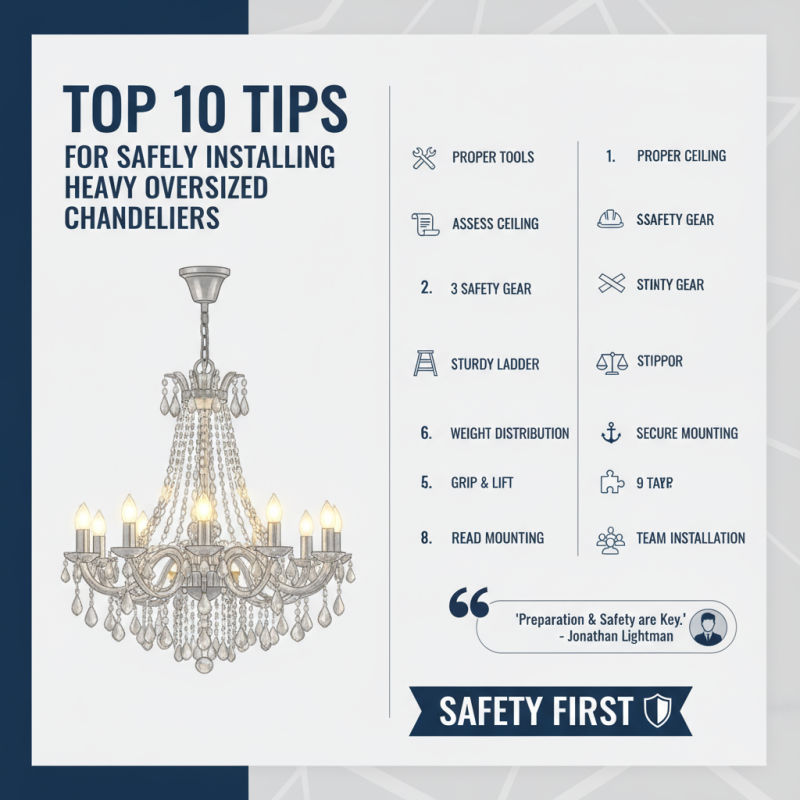
Top 10 Tips for Safely Installing Heavy Oversized Chandeliers
| Tip Number |
Tip Description |
Safety Precaution |
| 1 |
Choose the right location for the chandelier. |
Ensure adequate ceiling support. |
| 2 |
Turn off the power at the circuit breaker. |
Avoid electric shock while working. |
| 3 |
Use a sturdy ladder for height access. |
Prevent falls and injuries. |
| 4 |
Get help from an assistant. |
Ensure stability while lifting. |
| 5 |
Use appropriate hardware for hanging. |
Avoid chandelier falls. |
| 6 |
Check for compatibility with existing wiring. |
Prevent electrical issues. |
| 7 |
Secure all connections tightly. |
Ensure reliable power supply. |
| 8 |
Test the installation before final adjustments. |
Ensure functionality and safety. |
| 9 |
Maintain the chandelier regularly. |
Prevent future hazards. |
| 10 |
Consult a professional if unsure. |
Ensure correct and safe installation. |
Conclusion
When considering how to install heavy oversized chandeliers safely, it’s crucial to start with the right location. Identify a space that can accommodate the size and weight of the chandelier, ensuring it complements the room's design while being appropriately positioned to avoid any hazards. Next, assess the chandelier's weight and dimensions to determine the necessary support structures needed for safe installation.
Gathering essential tools and safety gear is vital to facilitate a secure installation process. Make sure to properly install the ceiling support structure to bear the chandelier's weight and follow all electrical safety precautions to prevent hazards. By adhering to these guidelines, you can safely and effectively install your beautiful oversized chandelier, enhancing your home’s aesthetic while ensuring safety.

 Trandic Light